Trailer Welding Repair for Cracked Frames, Ramps, and Hitch Components
A cracked trailer frame, bent ramp, or damaged hitch can slow down a job fast. For contractors, landscapers, farmers, transportation crews, and maintenance teams, a trailer is part of the workday. When it cannot be loaded, moved, or trusted for regular hauling, the delay can affect crews, equipment, schedules, and customers.
That is where trailer welding repair can help. At RC Portable Welding & Fabrication, we repair trailer parts, weld damaged components, and fabricate new pieces when the original part is too worn or damaged to keep using. Our goal is simple: help you get useful life back out of your trailer with repair work that matches how the trailer is actually used.
What Is Trailer Welding Repair?
Trailer welding repair is the process of fixing cracked, broken, worn, or damaged metal parts on a trailer through welding and fabrication. It is often used for frames, ramps, gates, hitch components, brackets, crossmembers, and custom trailer parts. For many work trailers, trailer welding repair can be a practical option when the damage is limited to repairable metal components and the rest of the trailer is still worth keeping.
What Trailer Damage Can Usually Be Welded?
Many common trailer problems start small. A ramp may begin to sag. A weld near the frame may crack. A bracket may loosen after repeated loading and unloading. These problems are easy to ignore until the trailer starts feeling unstable or becomes harder to use.
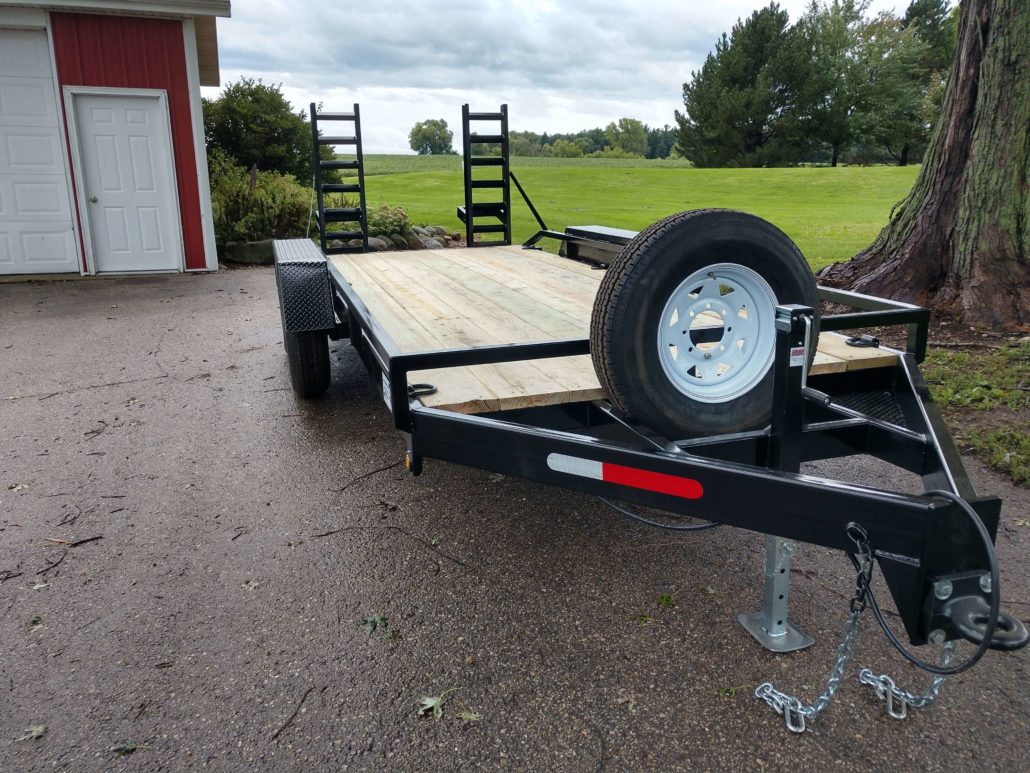
Common repair areas include cracked frames, broken ramp hinges, damaged gate supports, loose brackets, split welds, worn hitch areas, bent metal sections, and broken tie-down points. Some trailers also require additional support or replacement parts when the existing metal has been stressed over time.
The right repair depends on where the damage is, how deep the crack is, and how the trailer is used. A landscape trailer that carries mowers every day has different needs than a boat trailer, farm trailer, or equipment trailer used on job sites. We look at the trailer’s use, the damaged area, and the surrounding metal before deciding whether welding, reinforcement, or fabrication makes the most sense.
Why Cracked Frames and Hitch Areas Need Attention
Frame and hitch damage should not be brushed off. These areas carry much of the load and handle much of the movement during towing. If a crack grows, the trailer may start pulling unevenly, flexing more than it should, or putting stress on nearby parts.
A crack near a frame rail, tongue, coupler, crossmember, or hitch connection can also point to a larger stress issue. The problem may not be the crack alone. It could be tied to repeated heavy use, poor weight distribution, corrosion, or an older repair that no longer holds up.
Repairing these areas often means more than filling a crack. The damaged area may need to be cleaned, fitted, welded, and reinforced so the repair can handle real use. In some cases, we may fabricate a new section or support plate rather than rely on the weakened piece.
Repair vs. Replacement: How Do You Know What Makes Sense?
Repair is often a good option when the damage is limited, the surrounding metal is still solid, and the trailer still fits your work needs. A cracked ramp hinge, broken bracket, or damaged support may be repaired or replaced without replacing the whole trailer.
Replacement may make more sense when the frame is badly twisted, rust has spread through major structural areas, or the trailer no longer matches the work being done. If repair costs keep stacking up, a new build or major fabrication update may be the better long-term choice.
The main question is not just, “Can it be welded?” The better question is, “Will the repair make sense for how this trailer is used?” A trailer that carries equipment every day needs a different repair strategy than one used a few times a year.
When Trailer Welding Repair Starts To Matter
Trailer welding repair becomes worth considering when damage affects loading, towing, stability, or daily use. If a ramp no longer sits right, a hitch area looks cracked, or the frame shows movement under load, it is time to have the trailer checked before the problem grows.
This also matters when your trailer supports business operations. Maintenance managers, contractors, landscapers, roofers, farmers, concrete crews, and transportation teams often depend on trailers to move tools, materials, and equipment. A small trailer issue can become a scheduling problem when crews cannot get what they need to the job site.
Repair may not be needed for light surface wear, small cosmetic dents, or minor rust that has not affected the metal structure. It becomes more important when the trailer is harder to use, the damage is spreading, or the same part keeps failing.
Who Benefits Most From Trailer Welding Work?
Trailer welding work is a strong fit for businesses and property owners who rely on trailers for regular hauling. This includes industrial maintenance teams, landscape crews, construction companies, roofers, farms, concrete professionals, property managers, and boat owners.
For an industrial maintenance manager, the value is often uptime. If a trailer is used to move equipment around a facility or between job sites, repair work can help keep operations moving without waiting on a full trailer replacement.
For contractors and field crews, the value is practical. A repaired ramp, stronger gate, welded bracket, or rebuilt trailer part can make loading easier and reduce downtime. For farms and rural properties, portable welding can also be helpful when moving the trailer is difficult or not worth the extra delay.
Why Trailer Welding Is Common Across Working Industries
Trailer welding is trusted because many trailers are built from repairable metal components. When the damage is caught early and the base metal is still usable, welding and fabrication can restore function without starting over with a new trailer.
This type of work is common in trucking, transportation, agriculture, landscaping, construction, roofing, property maintenance, and boating. These industries use trailers in real conditions, often with repeated loading, changing terrain, weather exposure, and daily wear.
RC Portable Welding & Fabrication works with both in-shop and portable welding needs. That gives customers options based on the trailer, the repair, and the location of the work. Some projects are best handled at our Elkhorn shop, while others may call for mobile welding at the customer’s location.
Get Your Trailer Back To Useful Work
A cracked frame, damaged ramp, or worn hitch component does not always mean the trailer is done. The right repair can help restore function, reduce downtime, and make the trailer more dependable for the work ahead.
For trailer welding repair, RC Portable Welding & Fabrication can inspect the damaged area, explain the practical options, and complete the welding or fabrication work needed. Contact our team to talk through your trailer repair and find the best next step.

