
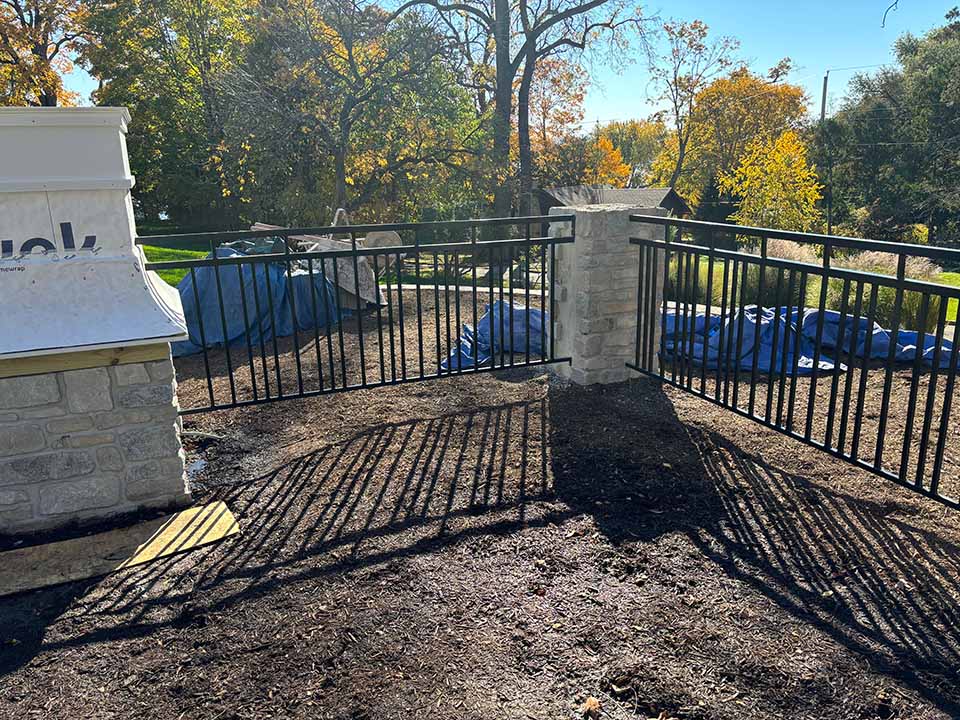
Metal Fence Welding for Gates, Hinges, and Structural Weak Points
A metal fence can hold up for years, but small failures often start in the same places. A gate begins to sag. A hinge loosens. A weld at a corner joint cracks after a rough winter. For homeowners, property owners, farms, shops, and local businesses in the Milwaukee area, these problems can quickly affect safety, access, curb appeal, or everyday use. That is where metal fence welding becomes a practical solution instead of a full replacement.
What Is Metal Fence Welding and When Is It Used?
Metal fence welding is the process of repairing or reinforcing fence components like gates, hinges, and structural joints using heat and filler material. It is commonly used when parts weaken, crack, or shift out of alignment. Metal fence welding helps restore strength and extend the life of an existing fence without replacing the entire system.
Why Do Gates and Hinges Fail First?
Gates and hinges take on the most movement and stress in any fence system. Every open and close cycle puts pressure on weld points and fasteners. Over time, this leads to wear that shows up in a few ways.
A gate may start dragging on the ground. Hinges can loosen or pull away from the post. In some cases, the metal around the hinge cracks from repeated strain.
This can happen on residential fences, driveway gates, farm gates, commercial fencing, storage areas, and many other metal fence systems. Frequent use, heavy gates, shifting ground, accidental impacts, and weather exposure can all accelerate wear. Metal fence welding allows us to reinforce these high-stress areas so the gate functions properly again.
How Metal Fence Welding Fixes Structural Weak Points
Structural weak points are not always obvious at first. A fence may look stable, but hidden stress points can develop at joints, corners, or connection points.
Metal fence welding addresses these areas by:
- Rebuilding cracked weld seams
- Adding reinforcement plates where needed
- Strengthening joints that have shifted over time
- Reconnecting sections that have separated
Instead of patching over the problem, welding restores the fence’s structural integrity. This is especially helpful when a property owner wants to keep an existing fence in place but needs certain areas repaired, reinforced, or made safe again.
Repair vs Replacement: When Welding Makes More Sense
One of the most common questions we hear is whether to repair or replace a section of a fence. In many cases, welding is the more efficient option.
Welding is often the better choice when:
- The majority of the fence is still in good condition
- Damage is limited to gates, hinges, or specific joints
- The structure is still aligned and stable
Full replacement may be necessary when:
- Large sections are rusted through
- Posts have shifted significantly
- The overall system has widespread failure
For many homeowners, property owners, farms, and businesses, targeted metal fence welding can solve the problem without the cost, mess, or time involved in replacing the full fence.
When This Matters Most for Your Property
There are specific situations where metal fence welding becomes a priority.
You may need to act quickly if:
- A gate no longer closes or locks properly
- A hinge has broken or pulled away
- A fence section is leaning or separating
- A driveway gate, yard fence, enclosure, or business entry point is no longer secure
In Milwaukee and surrounding areas, freeze-and-thaw cycles can also stress metal over time. Small cracks can expand during winter, leading to larger structural issues by spring.
Addressing these problems early helps prevent further damage, keeps the fence usable, and provides property owners with a safer, stronger fence without waiting for the issue to worsen.
Where Metal Fence Welding Is Commonly Used
This type of work is used on many different types of properties because it provides a direct fix to structural issues without overcomplicating the process.
You will often see metal fence welding used in:
- Residential metal fences and gates
- Driveway gates and entry gates
- Farm gates and property enclosures
- Commercial and shop fencing
- Storage areas and utility enclosures
- Security fencing around larger properties
These fences all need to withstand regular use, changing weather, and everyday wear. Welding helps extend the life of existing materials while maintaining strength where it matters most.
Keep Your Fence System Working With Metal Fence Welding
Metal fence problems rarely fix themselves. Small issues at gates, hinges, or joints tend to grow over time and affect how the entire system performs. Metal fence welding lets you fix those problems directly and keep your fence doing its job.
If your home, property, farm, or business is dealing with sagging gates, broken hinges, cracked welds, or weak structural points, it may be time to take a closer look. Our team at RC Portable Welding & Fabrication handles on-site welding and custom repairs to restore your fence system to working order. Reach out to schedule an evaluation and keep your fence strong, safe, and ready for everyday use.

